How to Spot a “Professional” Installer from Built-in Work Practical Signs & Checklist
16 Oct 2025
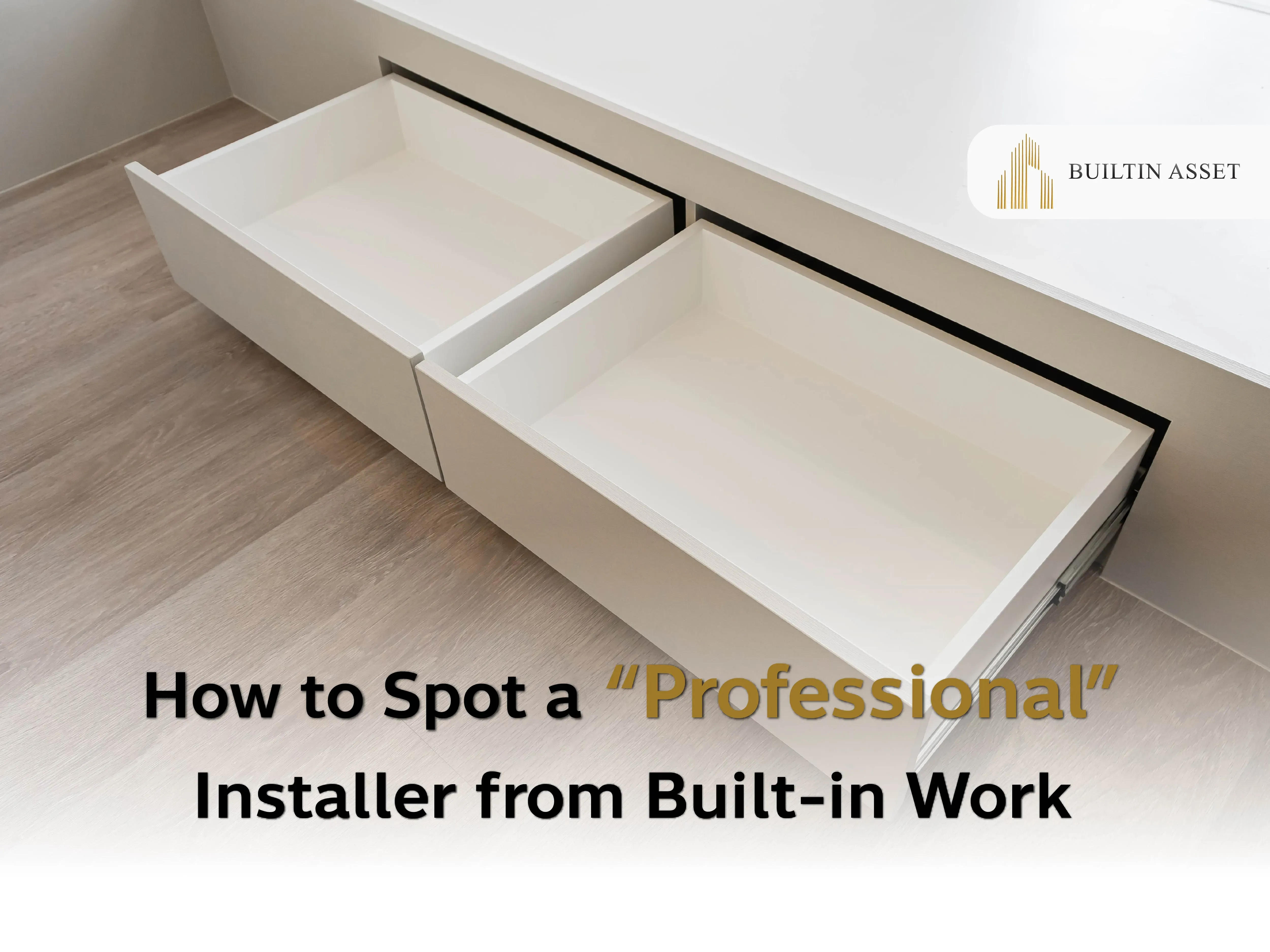
How to Spot a “Professional” Installer from Built-in Work Practical Signs & Checklist Investing in built-in furniture is long-term. Knowing how to evaluate workmanship helps you avoid headaches later. This guide shows practical details to inspect from corner joins and surface flatness to hardware and real-world functionality. Why this matters Good built-in work is not just about looks it must function well, be durable, and be safely installed. Spotting red flags early saves time and money. Professional workmanship: What to look for 1) Joints & Corners Tight, neat joints without filler masking gaps True right angles; no visible skewing from a distance Joinery details are clean no sloppy patching 2) Surface Flatness & Consistency No waves, buckles, or inconsistent seams on panels Even gap clearances around doors and frames (±1–2 mm is good) Grain alignment (veneers) and pattern continuity where relevant 3) Handles & Hardware Quality branded hardware (hinges, drawer slides, handles) with clear specs Hinges operate smoothly and align; soft-close or hydraulic hinges if specified Drawer slides run smoothly and quietly under load 4) Real-World Functionality Drawers support rated loads without sagging Soft-close works smoothly no slamming or delayed action Doors and drawers open/close with reasonable hand force 5) Finishing Details Edge banding cleanly applied no peeling or bubbling Cut ends finished cleanly no splinters, excess glue or burrs Seals to wall/floor are neat, preventing dust and moisture ingress 6) Site Cleanliness & Handover Workspace cleaned after installation no leftover debris Formal handover with punch-list and documented defects to be fixed Installer provides care instructions and warranty terms On-site inspection checklist (before sign-off) Use this quick test list during final inspection: Open & close every door and drawer; inspect for chips or rubbing Pull each drawer fully to check glide and noise Visually and tactically check gap uniformity around panels Inspect edge banding, glue lines, and finish quality Check mounting integrity no wobble or loose fittings Verify hardware brand/model if available and test soft-close functions Confirm warranty paperwork and punch-list items are provided Quick summary Professional built-in work shows in the details: clean joints, flat surfaces, uniform gaps, reliable hardware, and a tidy handover. Use the checklist above when inspecting to ensure you receive durable, high-quality results.